
Licensing checklist before you produce a figure of a character
A practical rights and approval checklist for creators preparing an original or licensed character for resin figure production.
Published · By Ethan, Amoy Figures
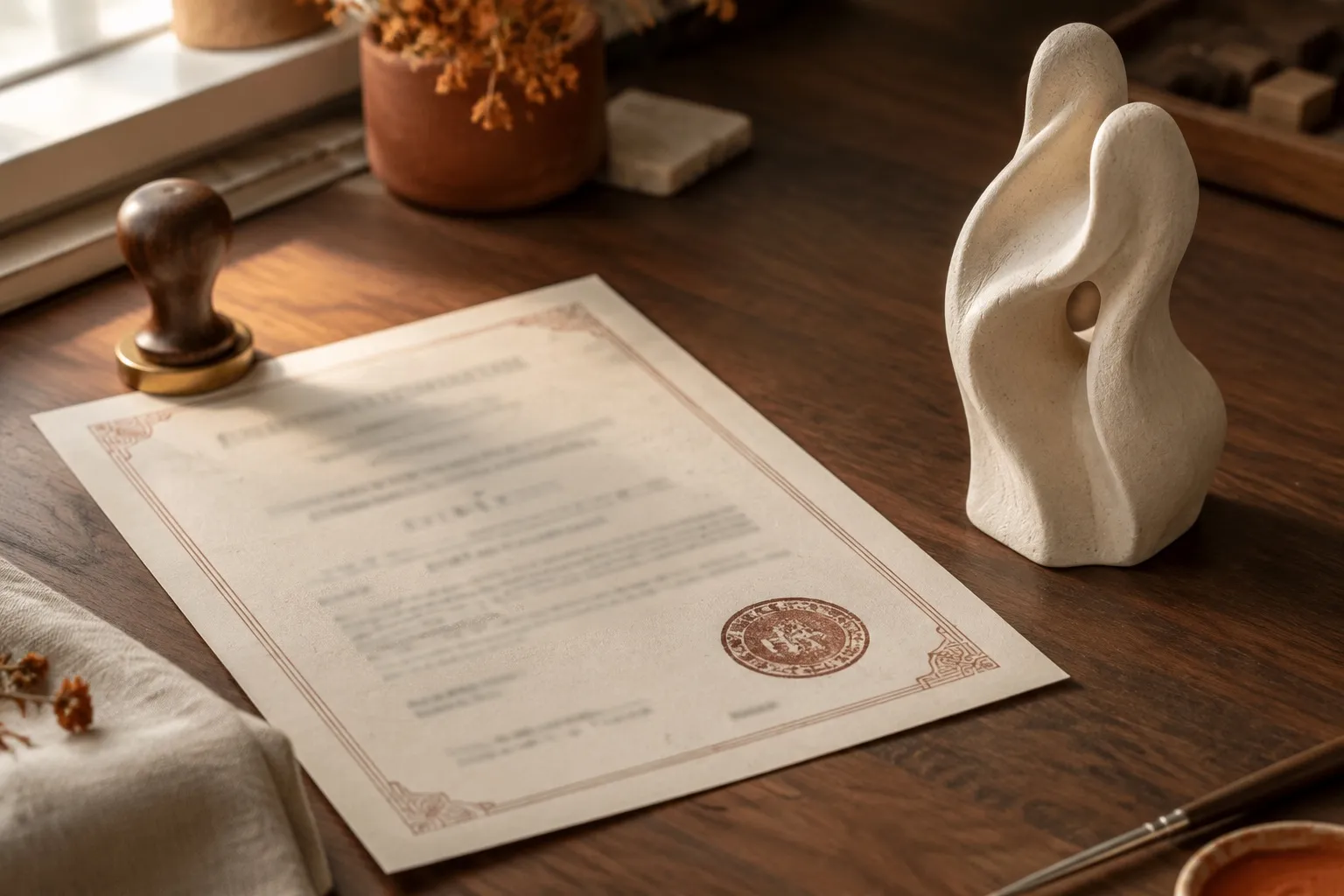
Before a character becomes a production-ready resin figure, confirm who controls the relevant rights and whether the planned agreement actually covers the product you intend to make. A useful clearance pack identifies the rightsholder, the character and artwork, the permitted product category, territories, sales channels, term, quantities, manufacturers, approvals and ownership of new production assets. These are practical contract checks, not a universal legal formula. United States and United Kingdom rules differ, and a qualified adviser should review any uncertain ownership or licence language.
This checklist is for independent creators, small brands and crowdfunding teams preparing an original or authorised character as an adult display collectible. It helps find questions before sculpting begins; it does not determine whether a project is legally cleared.
1. Identify the rightsholder and the chain of authority
Start with the person or company that created or currently controls the character. Record the legal name of that party and how the party acquired the rights. If an agent, publisher or licensing company grants permission, ask what authorises it to act for the owner.
Trace every link between the original creator and the party placing the manufacturing order. Keep the underlying agreements, amendments and relevant schedules together. A licence from an intermediary is useful only to the extent that the intermediary can grant the rights described in it.
2. Review agreements with commissioned artists
Original characters can involve several contributors. Payment for a commission or delivery of the files does not, by itself, answer every ownership question.
Review each contributor agreement for language covering ownership or permitted use, commercial merchandise, changes to the artwork, 3D adaptation and work by later suppliers. Also check whether the artist retained approval rights, credit rights or restrictions on alteration.
The US Copyright Office distinguishes copyright ownership from ownership of the physical object in which a work appears and states that a copyright transfer generally needs a signed writing. UK government guidance likewise says that a copyright sale or transfer requires a written, signed document. Possession of an artwork file, printed model or physical master is therefore not a substitute for reviewing the agreement.
If an older commission has no written terms, resolve the gap before commissioning the sculpt. Do not ask the sculptor or factory to infer rights from an invoice or email thread.
3. Confirm permission to turn 2D art into a 3D product
A production project normally changes the source art: hidden surfaces must be designed, parts must connect, and a base or accessories may be added. The figure may involve adaptations and new creative contributions.
Your agreement should be checked for permission to create a three-dimensional version, make production changes and manufacture commercial copies. If the licence names only a different type of merchandise, do not assume it includes resin figures. Ask the rightsholder or an adviser to clarify the scope in writing.
This is also the point to list the exact character version, costume, pose, expressions, logos and supporting artwork that the project may use. Clear references reduce both rights ambiguity and revision rounds.
4. Separate copyright, trade marks, names and likenesses
A figure can raise several distinct questions. Art and sculpture may involve copyright; names and logos may involve trade marks; a real person’s likeness may require separate review.
Check each layer separately:
- Who controls the character artwork and the right to adapt it?
- Are any names, logos, symbols or packaging marks included, and who can authorise their use for this product?
- Does the design portray an identifiable living person? Check what permission or consent, if any, the intended uses and markets require, and seek qualified advice where the answer is unclear.
- Are third-party fonts, patterns, photographs, stock assets or accessories incorporated into the design?
The USPTO explains that trade mark rights are connected to specified goods or services. UK guidance describes a trade mark licence as a formal agreement with the owner. Neither point means that a copyright licence automatically grants trade mark permission, or the reverse.
5. Match the licence scope to the actual production plan
Prepare a one-page scope sheet and compare it line by line with the agreement. Useful fields include:
| Scope item | What to record |
|---|---|
| Product | Resin figure, statue, bust, base, accessory and packaging elements |
| Edition | Planned quantity, variants, replacements and samples |
| Territory | Where manufacturing, marketing and sales may occur |
| Channels | Direct sales, retail, wholesale, events or crowdfunding rewards |
| Term | Start date, end date, renewal terms and production cut-off |
| Suppliers | Factory, sculptor, 3D modeller, printer, packaging vendor and other approved contractors |
These fields are drafting and project-control recommendations. The exact terms needed depend on the agreement and governing law. If the licence sets a quantity cap, territory or channel limit, the production brief and purchase order should use the same limits.
6. Check whether suppliers may receive and use the assets
Manufacturing requires sharing reference art and, later, sculpt files, paint guides and packaging layouts. Check whether the agreement permits disclosure to the sculptor, factory and other production suppliers. If the licence restricts subcontracting or requires named approved vendors, resolve that point before files are sent.
Define the permitted supplier use: quoting, sculpting, sampling, production, quality control and approved replacements. Address confidentiality, access, return or deletion, and portfolio use.
Our project policy is to work with original or authorised designs only. When requesting a quote, prepare the relevant ownership or licence information along with your artwork. See the IP policy and project enquiry form for the information requested at the start of a project.
7. Build approvals into the schedule
Licensing and creative approvals can affect the production timeline. List who can approve each stage and how approval will be recorded. Common checkpoints include:
- sculpt or 3D model;
- prototype or master;
- painted sample and colour references;
- base markings, copyright notices and trade marks;
- packaging artwork, warnings and product description; and
- production sample or agreed quality reference.
Avoid approving only an attractive rendering. Approval records should identify the dated file or physical sample so the production reference is unambiguous.
8. Decide who owns new production assets
The project may generate a digital sculpt, print-ready file, mould plan, paint master, packaging layout and photography. Decide who owns or may reuse each asset. Also address whether the sculptor or manufacturer may modify files for production and whether the buyer receives editable source files or only final output.
Keep this separate from ownership of the underlying character. Owning a new sculpt file does not necessarily expand the licence to the original character, and owning the character does not automatically settle the sculptor’s contract.
9. Plan for expiry, termination and sell-off
Record the last date for accepting orders, starting production and selling finished stock. Ask what happens to overruns, rejected units, replacement stock, samples, moulds, packaging and digital files when the agreement ends.
If a sell-off period exists, record its territory, channels, reporting duties and end date. Do not assume that remaining inventory can be sold indefinitely. Arrange destruction, return, storage or deletion only as the agreement and applicable requirements direct.
10. Keep a production clearance pack
Before authorising the sculpt, place the following in one controlled folder:
- the ownership record or signed licence and relevant amendments;
- the rightsholder and authorised contact details;
- the approved scope sheet;
- contributor and supplier agreements;
- dated design, sculpt, sample and packaging approvals;
- required credits, notices, markings and restrictions; and
- expiry, sell-off and asset-disposal instructions.
The pack should let a project manager explain why each asset was supplied and what the manufacturer may do with it.
Adult collectible positioning is not automatic classification
The intended product here is a resin collectible for adult display, rather than a children’s play product. That positioning alone does not settle regulatory classification.
In the United States, the CPSC considers several factors when deciding whether a consumer product is primarily intended for children, including intended-use statements, packaging and advertising, consumer recognition and age-determination guidance. Its guidance discusses characteristics that may distinguish adult collectibles, but it also stresses that classification depends on the facts.
Great Britain has its own toy-safety scope guidance, including exclusions from the toy rules for listed products. Do not carry a conclusion from one market into another. The buyer or importer should verify classification, labelling, testing and documentation for the design and destination. “Adult collectible” or “display only” is not a substitute for that review.
When to obtain qualified advice
Ask a qualified intellectual-property or product-compliance adviser when the ownership chain is incomplete, an old commission is undocumented, a licence uses unclear product language, several territories are involved, a real person’s likeness is used, or the intended audience and product classification are uncertain.
The practical goal is straightforward: resolve scope questions while the project is still artwork, not after the sculpt, packaging or production run has been approved. Once the rights and approval pack is ready, review the custom resin figure service and send the project details for a manufacturing discussion.
Frequently asked questions
▸Is a permission letter enough to manufacture a character figure?
It may help, but a short letter does not automatically answer who owns each right or whether permission covers resin figures, manufacturing, territories, sales channels, quantities and production suppliers. Compare the document with the planned project and ask a qualified adviser about gaps or unclear wording.
▸Do I own the rights if I paid an artist to design the character?
Payment for artwork does not by itself answer every ownership and manufacturing question. Review the artist agreement for ownership or licence terms, the right to adapt the art into a 3D figure, commercial merchandise use, and ownership of new production files. Rules differ by country, so obtain advice if the contract is silent or unclear.
▸Can a successful crowdfunding campaign prove that a figure is licensed?
No. Campaign approval, funding or public availability does not establish the campaign owner's rights to manufacture a character. Keep the ownership or licence documents and make sure their scope matches the product, markets, term, quantity, channels and suppliers involved.
▸Does calling a figure an adult collectible remove toy-safety requirements?
Not automatically. Classification can depend on the product's design, presentation, packaging, marketing, foreseeable use and destination market. The buyer or importer should confirm the applicable classification, labelling, testing and documentation for each market before production.
Sources
- Chapter 2: Copyright Ownership and Transfer — accessed 2026-10-22
- Trademark scope of protection — accessed 2026-10-22
- How copyright protects your work: License and sell your copyright — accessed 2026-10-22
- Using somebody else's intellectual property: Trade marks — accessed 2026-10-22
- Children's Products — accessed 2026-10-22
- Toys (Safety) Regulations 2011: Great Britain — accessed 2026-10-22
Related guides
-
Custom resin figure MOQ and cost: what you pay for and why small runs cost more
Understand resin figure MOQ, development charges, unit-cost drivers, and how to compare quotes for a small collectible run.
-
How custom resin statues are made: from 2D art to a production run
A practical production guide for turning original or licensed 2D art into a sampled, painted and packed custom resin statue run.