
Custom resin figure MOQ and cost: what you pay for and why small runs cost more
Understand resin figure MOQ, development charges, unit-cost drivers, and how to compare quotes for a small collectible run.
Published · By Ethan, Amoy Figures
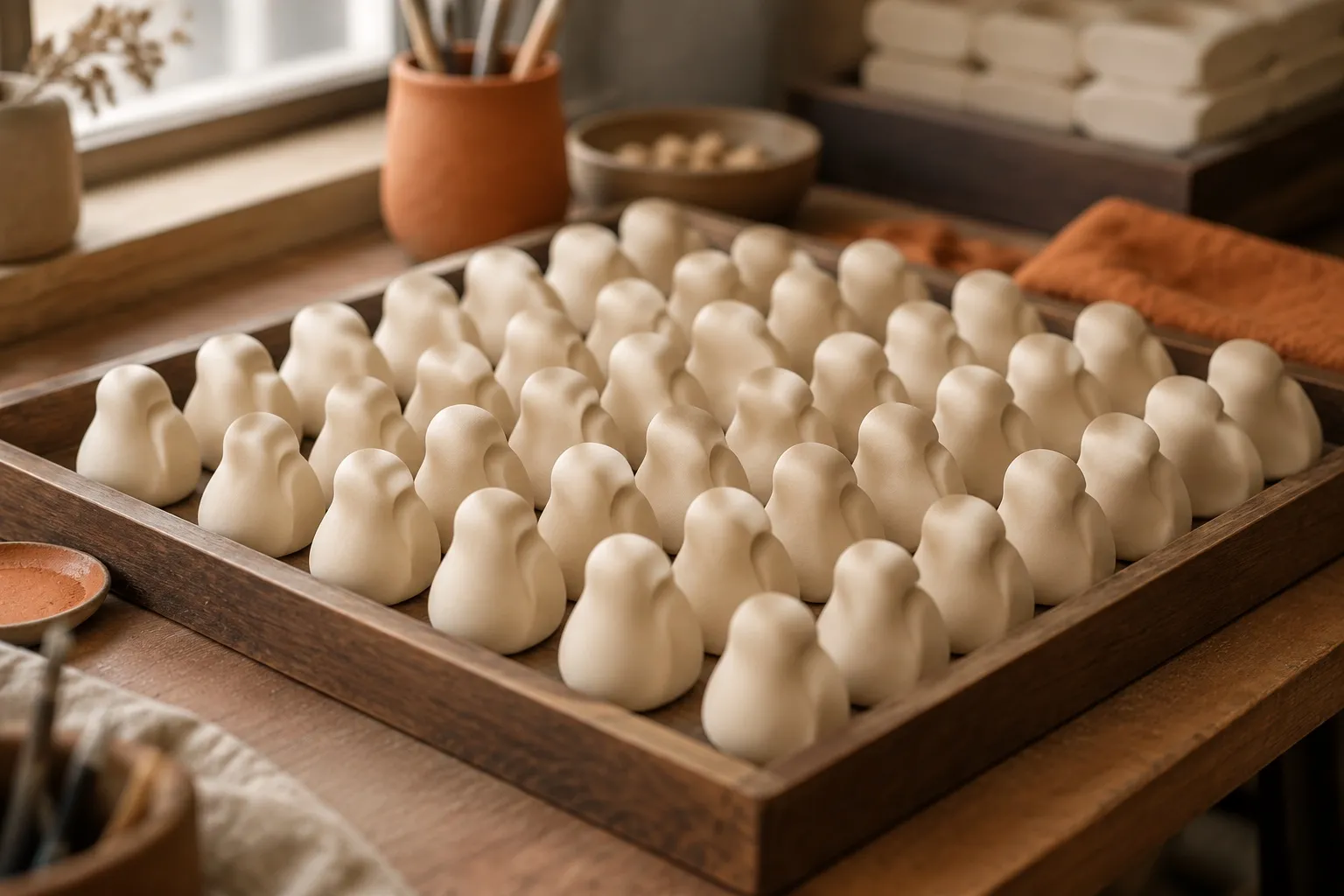
The practical answer is simple: the factory’s standard MOQ is 300 pieces, while a run from 100 pieces may be possible at a higher unit price. A smaller run does not remove the sculpting, sample development, mould preparation, paint trials, packaging work, or production setup. It divides those costs among fewer saleable pieces.
That is why the cheapest-looking unit price is rarely enough to choose a supplier. For an independent IP creator, small brand, or crowdfunding team, a useful quote must show what is being made, which costs are included, and where responsibility changes hands. Compare the same scope, packaging, inspection, testing, delivery basis, and quantity for each design.
Confirm how MOQ applies to each design and variant
For custom resin figures, the factory’s standard minimum is 300 pieces. It may accept 100–300 pieces, but the lower quantity carries a higher price per piece.
The factory’s general MOQ answer does not say whether different designs, sizes, or colourways can be combined. A new pose, scale, base, or sculpt may require separate development and production planning. A paint variant may reuse the same form, but it still creates its own colour reference, paint setup, handling, packaging allocation, and inspection requirements. Ask for each SKU and paint version to be listed separately, then have the supplier state in writing how the MOQ applies and whether any quantities can be combined.
The same principle applies to an adult collectible blind-box series. Every character or variant needs to be identified in the quote. A series total does not explain the quantity or cost treatment for each individual design.
Why a 100-piece run costs more per figure
The cost of a resin figure has two broad parts: work needed to make the product production-ready, and work repeated for every unit. The first part does not shrink in proportion to the order.
Before production, a project may need a sculpt, engineering of the parts, a printable or hand-made master, moulding, casting of sample blanks, surface correction, paint trials, and an approved painted sample. Sculpting and sampling are charged separately; sample pricing depends on size and difficulty. Whether the master is sculpted by hand in clay or modelled digitally and 3D printed depends on the product. If you already have usable STL or OBJ files, the starting work may differ, but the file still needs to suit the intended casting and assembly process.
Once production begins, the supplier repeats casting, trimming, surface preparation, assembly, hand painting, inspection, and packing. Size affects material use and handling. Fine details or many separate parts affect the moulding and assembly plan. Paint complexity affects the number of controlled steps, masks, colour matches, and hand-applied details. A custom box or insert adds another item that must be specified and sourced.
For planning, think of unit economics as:
landed cost per saleable unit = development allocation + production unit price + packaging + testing allocation + freight, duty, tax, and local delivery allocation
At 100 pieces, the development and setup portion is spread across a small number of units. At 300 pieces, more units share it. That arithmetic explains the direction of the price difference, but it does not justify inventing a universal price or discount. The actual quotation depends on the specific sculpt, finish, quantity, and commercial terms.
What should appear in the quote
A clear quotation should make it possible to reconstruct the project scope. Ask for the following items or confirmations:
- Product definition: design name, intended size, pose, base, parts, material, finish, and approved reference files.
- Quantity by SKU: the number for each character, sculpt, size, and paint version, plus the MOQ treatment for each line.
- Development scope: sculpting and sampling charges, what each stage delivers, and which revision assumptions are included.
- Production scope: unit price tied to an exact quantity and an approved sample, with assembly and paint requirements stated.
- Packaging: individual protection, inserts, printed box, labels, master cartons, and any pack-out needed for fulfilment.
- Inspection and testing: the pre-shipment inspection included by the factory and any buyer-requested third-party testing shown separately.
- Commercial boundary: payment stages, delivery basis, freight responsibility, and which taxes, duties, or destination charges are excluded.
This structure also makes competing quotes comparable. A lower figure that excludes the printed box, insert, testing, or delivery is not the same offer as a quote that includes those items. Likewise, “sample included” is too vague unless you know whether it covers the sculpt, moulding, unpainted blank, painted sample, revisions, and physical delivery of the sample.
Treat development-fee relief as a written term
The factory charges sculpting and sampling fees at the start. On a larger order, those charges may be refunded or amortised into the unit price. That is a quotation option, not a standing promise for every project.
If this matters to your campaign budget, ask the quote to state the treatment precisely. Does the stated unit price already include an allocation? Is a charge credited only after a specified production order is placed and paid? Does a quantity change alter the arrangement? A phrase such as “refundable on bulk order” is not enough for cash-flow planning without the trigger and amount being written into the quotation.
For crowdfunding, keep the initial development payment separate in your budget even if a later credit might apply. This prevents a conditional credit from being counted twice: once as lower development spending and again as part of the production unit cost.
Packaging, inspection, and testing change the comparison
Custom packaging is available, but “custom box” can describe very different scopes. Decide whether you need a printed carton, protective insert, collector card, barcode or compliance label, tamper treatment, or ship-ready packaging for a fulfilment centre. Give every bidder the same request.
A dedicated inspector checks goods before shipment. Your purchase documents should still define the approved sample, appearance points, packaging checks, reporting format, and what happens if an issue is found. “Inspection included” describes an activity; an agreed inspection scope tells both sides what acceptance means.
Buyer-requested testing can be arranged, and its fee is paid by the buyer. Do not select a test package from the material name alone. In the United States, the CPSC’s children’s-product guidance explains that describing a figure as an adult collectible does not by itself decide its classification; intended use, marketing, packaging, consumer recognition, and other facts can matter. In any destination, collectible positioning does not automatically remove applicable product-safety or testing duties. Confirm the product classification, labelling, testing, and documents for each market before approving production. This is a planning prompt, not a legal conclusion.
Add time and cash flow to the buying decision
Price comparisons should use the same project stage. Sculpting usually takes about 10–15 days. Moulding, casting blanks, and paint trials take another 10–15 days, making the path from artwork to a first sample about 20–30 days. Revisions, buyer review, and final approval can add time after that first sample. The factory’s reported production estimate is about 50 days, excluding sampling. Use that as a reference rather than a fixed lead time, and confirm the schedule for the quoted scope and quantity. Around 30 days may be possible in special circumstances, but it should not be presented to backers or retailers as a guaranteed schedule.
Those stages affect cash flow. Development starts before an approved unit exists. Production follows sample approval. Freight, import charges, and destination handling arrive later. Build your budget around those decision points and allow time for approvals and corrections. The full production process provides the sequence to align with your payment plan.
Compare landed cost without guessing duties
Factory price and landed cost are different. Your comparison should state whether freight, insurance, import clearance, duty, VAT or other tax, port or courier charges, and delivery to your warehouse or fulfilment partner are included.
Do not assign one tariff code or duty rate to every resin collectible. Classification can depend on product type, use, materials, origin, destination, and current rules. US importers can use CBP’s duty-rate guidance to start their research and seek specific customs guidance; UK importers can use the current Trade Tariff to check commodity codes, duty, and VAT. Confirm the treatment with the relevant official tool or a customs adviser before treating a landed-cost estimate as final.
Send one quote-ready brief
The fastest way to get a useful answer is to remove assumptions. Send your artwork or STL/OBJ file, target size, quantity for each design and variant, paint references, packaging request, destination country, required date, and intended market positioning. State whether you want development fees separate from the unit price and whether testing or a particular inspection report must be quoted.
Then ask for a written breakdown with exclusions and timing. You can use the project enquiry form to provide the starting information. If the design is not entirely your own, review the IP policy and confirm that your written permission covers the product and manufacturing use before sharing files.
Frequently asked questions
▸What is the minimum order quantity for a custom resin figure?
The factory's standard MOQ is 300 pieces. Orders from 100 pieces may be accepted at a higher unit price. Ask the quotation to state how the MOQ applies to each design, size, and paint version, because the factory's general MOQ does not by itself define which variants can be combined.
▸Can sculpting and sampling fees be refunded?
A larger order may allow sculpting and sampling charges to be refunded or spread into the unit price. This is arranged project by project. Your quotation should state whether either treatment applies, when it applies, and what happens if the order quantity changes.
▸How long does development and production take?
Sculpting normally takes about 10–15 days, followed by another 10–15 days for moulding, casting blanks, and paint trials. Artwork to a first sample is therefore about 20–30 days, before any extra revision or approval time. The factory's reported production estimate is about 50 days, excluding sampling. Treat it as a reference and confirm the schedule for the quoted scope and quantity; about 30 days is possible only in special circumstances and is not a promise.
▸Who pays for product testing?
Testing can be arranged when the buyer requests it, and the buyer pays the testing fee. The required scope depends on the product, intended user, presentation, and destination market, so confirm classification, standards, labelling, and documents before approving the quotation.
Sources
- Children's Products — accessed 2026-10-22
- How do I determine the duty rate on my goods? — accessed 2026-10-22
- Trade Tariff: look up commodity codes, duty and VAT rates — accessed 2026-10-22
Related guides
-
Licensing checklist before you produce a figure of a character
A practical rights and approval checklist for creators preparing an original or licensed character for resin figure production.
-
How custom resin statues are made: from 2D art to a production run
A practical production guide for turning original or licensed 2D art into a sampled, painted and packed custom resin statue run.